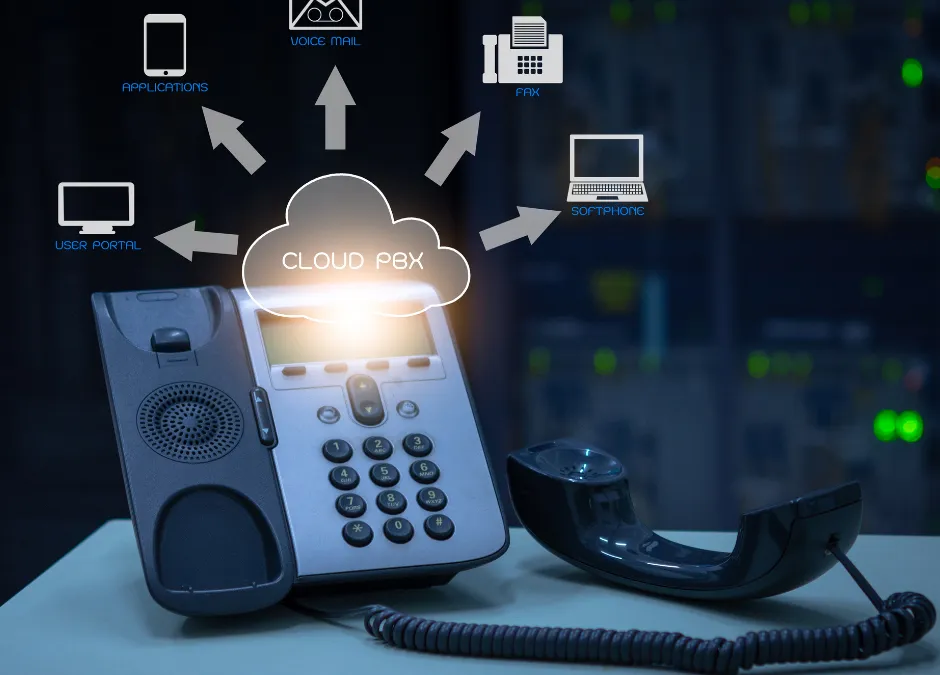
The best dental office phone systems catch the morning rush, keep patient data HIPAA compliant, and connect to your practice management software. That’s harder than it sounds.
A busy office can take 80 to 150 calls a day, most of them between 8 and 10 AM. When the phones can’t keep up, callers hang up and book somewhere else.
So we compared 9 providers on 5 weighted technical criteria.
For each one, you’ll see its price model, the practice management software it supports, and how it handles HIPAA texting.
We also added a buyer guide for single offices and multi-location groups.
How we picked these dental phone systems
We started with some market research to find the leading phone systems for dental offices that offer HIPAA-compliant features. From there, we scored each provider on five technical criteria:
| Criterion | Weight | What we checked |
|---|---|---|
| Security and BAA terms | 25% | Signed BAA, HIPAA texting, encryption, compliance certifications |
| Reliability | 25% | Published uptime SLA, redundancy, behavior during an internet outage |
| Cost and included features | 20% | Price model and transparency, texting caps, and what costs extra |
| Dental front-desk features | 15% | PMS integration, call queuing, reminders, missed-call texting, AI answering |
| Setup and support | 15% | Onboarding time, number porting, and how fast a human answers |
Reliability has the same weight as security. When the phones go down during the morning rush, patients who cannot get through book with the practice down the street.
How we score: each criterion gets a rating from 1 to 5. The final score is the weighted average, shown with its breakdown at the end of each review.
The best dental office phone systems compared
1. Vivant Dental Office Phone System
The best overall dental office phone system for practices that are done losing new patients to missed calls.
Vivant answers every patient call, routes it to the right person or department, and texts back when a call is missed. Vivant’s HIPAA-ready phone system can integrate AI answering to handle calls and common questions about office hours, location, directions, dentists, and services.
It can also text patients self-service links to schedule appointments, request information, or access other resources. If a call needs staff attention, it routes the call to the right team member or department. If staff miss the call, Vivant automatically texts the patient with self-service options so they’re not left waiting.
It’s backed by a 100% uptime guarantee, while the Vivant team handles setup and proactively monitors the system in real time. Dental practices and multi-location dental groups that need reliable, secure communications get the most value from it.
At a glance:
- Best for: busy, multi-location dental groups and DSOs
- Price: from $29.99 per user per month, with unlimited calling, the mobile and desktop apps, and the 100% uptime system on every plan. Professional plan ($39.99) adds the auto attendant, call recording and business texting.
- AI Answering option: natively integrate an AI Receptionist that handles most common patient questions and frees up staff. Starting at $59 per month.
- BAA: included with every deployment, at no extra cost
- Uptime: 100%
- Support: phone services monitored 24/7; Vivant catches outages before they reach your practice
- Average savings: 20% on your monthly phone bill
Strengths:
- A BAA on every plan: many popular VoIP platforms do not offer a BAA by default, or keep it for enterprise tiers. With Vivant, the BAA comes with every deployment.
- Unlimited business texting: recall reminders, appointment confirmations and quick replies from your office number, with templates, scheduling and auto-replies. No monthly caps and no texting boosters. RingCentral, Nextiva and RevenueWell cap text messages.
- Missed-call texting: every patient you could not answer gets a text from your own number, so a new-patient call becomes a booking, not a lost lead.
- No hidden fees: call recording, voicemail-to-email transcription, ring groups, call parking, conference rooms, E-911 and nationwide calling are part of the plan, not paid add-ons.
- Front-desk routing: auto attendant, ring groups and call queuing by schedule, plus after-hours and holiday rules that send dental emergencies to the on-call dentist.
- AI Receptionist: an AI voice agent that answers 24/7, captures the caller’s details and books appointments in real time, even after hours.
- 100% uptime SLA: the High Availability Fault Tolerant (HAFT) architecture runs the phone system across several cloud providers and regions and fails over on its own. If the internet at your office drops, the mobile app keeps phones working over cellular, and calls reroute to backup numbers or voicemail.
- One system for every location: calls transfer between offices, and the group phonebook and caller ID work the same at every site. Managers see missed calls across all offices in one portal, with one bill and one support team.
- Command Central analytics: real-time dashboards show missed calls by time of day, call volume and team activity, by location.
- Hardware for a dental floor plan: Grandstream desk phones, DECT cordless handsets for staff who move between operatories, and a 20-key sidecar for the receptionist. Phones arrive preconfigured, with secure boot and encrypted storage.
- Managed setup: Vivant maps your call flows, ports your phone numbers and supports the system with live technicians and free lifetime maintenance. Choose a self-managed or a fully managed system.
How Vivant compares:
| Feature | Vivant | Typical dental phone provider |
|---|---|---|
| BAA | Every deployment, no extra cost | Higher tiers or on request |
| Business texting | Unlimited, no caps | Capped, or extra fees for more messages |
| Call recording | Included on Professional | Paid add-on or top tier only |
| Uptime guarantee | 100% | 99% or none published |
| Setup | Self-managed or fully managed | Self-setup or weeks of onboarding |
| Support | Proactive monitoring, backed by real people | Varies by plan |
| Multi-location | One portal, one bill and one support team | Separate accounts or extra fees |
Healthcare results:
Gateway Diagnostic Imaging
Before Vivant, internet outages meant dropped calls, constant disruptions in online consultations, and failed payment transactions for Gateway Diagnostic Imaging. But ever since switching to Vivant, the company saves 13.5% in monthly costs.
Advantageous Add-on Services:
A team responsible for all connectivity
A dental office’s phones, practice management software, imaging and card terminals all run on the same internet connection. If it fails, the front desk cannot book, check in or take payments. Vivant SmartNETWORKS closes that gap, an option not offered by many competitors. Vivant designs, deploys and manages every layer behind your phones, including primary internet, backup internet and network security, so one team is accountable from the network to the call.
If a missed call is a missed new patient and you want a HIPAA compliant phone system that stays up, with no caps on texting and no surprise fees, Vivant is a great option not offered by many competitors. Add SmartNETWORKS if you want one provider to run the internet, backup and network security behind it, at every office.
Score: 4.7/5 (Security and BAA 4.5 · Reliability 5 · Cost and features 4.5 · Dental front-desk features 4 · Setup and support 5)
2. Nextiva
Nextiva fits offices that want voice, video and texting in one app with compliance credentials.
At a glance:
- Best for: offices that need voice, video and texting
- Price: $23 to $50 per user per month, billed monthly
- BAA: yes
Strengths:
- HIPAA, SOC 2 and PCI compliance.
- Review management built in.
- 24/7 support.
Considerations:
- HIPAA pricing needs a call with sales.
- No dental tools such as insurance verification.
- SMS is capped: 100 to 500 messages per user on the lower plans.
- Outages: if the internet goes down, phone service goes down.
- Call deflection: no automated texting to offer patients self-help, such as online booking, directions or parking.
Choose it if you want one general business system with good support. Skip it if you need dental-specific tools or want to automate your phones.
Score: 4/5 (Security and BAA 4 · Reliability 4.5 · Cost and features 3 · Dental front-desk features 3 · Setup and support 4)
3. RingCentral
RingCentral is a pick for practices with high call volume that want enterprise-grade reliability. It holds HIPAA and HITRUST credentials.
At a glance:
- Best for: large practices with high call volume
- Price: $30 to $45 per user per month, billed monthly
- BAA: yes, on advanced plans
Strengths:
- HIPAA and HITRUST credentials.
- 300+ integrations, including telehealth tools.
- Desk phone rentals.
Considerations:
- No outages coverage: if the internet goes down, phone service goes down.
- Texting caps: 25 messages per user per month on the base plan, and 100 to 200 on higher plans.
- Call recording and higher text limits need the Advanced plan or above.
- Add-ons for AI receptionist, call queues and extra texting.
- Complex for a small office.
Choose it if you have a large team and heavy call volume. Skip it if you text patients a lot on a small budget.
Score: 3.9/5 (Security and BAA 4 · Reliability 4.5 · Cost and features 2.5 · Dental front-desk features 4 · Setup and support 3)
4. Zoom Phone
Zoom Phone is the low-cost pick, and a good fit for offices that already use Zoom or offer teledentistry.
At a glance:
- Best for: low-cost setups and teledentistry
- Price: $10 to $20 per user per month; the healthcare plan is priced by quote
- BAA: on the healthcare plan or business and enterprise plans
Strengths:
- Low price on standard plans.
- HIPAA plan available.
- Video and an AI assistant built in.
- EHR integrations.
Considerations:
- Not dental-specific.
- No texting from shared numbers, which limits a shared front-desk line.
- Healthcare pricing is not public.
- No outages coverage: if the internet goes down, phone service goes down.
Choose it if you want a simple, low-cost system with video. Skip it if your front desk texts from one shared number.
Score: 3.8/5 (Security and BAA 4 · Reliability 4 · Cost and features 4.5 · Dental front-desk features 3 · Setup and support 3)
5. Weave
Weave dental phone system reviews praise the all-in-one design: phones, texting, reviews and payments in one dental platform. The common complaints are the price, which is not transparent, and occasional glitches.
At a glance:
- Best for: an all-in-one dental communication platform
- Price: $249 to $279 per office per month
- BAA: yes
Strengths:
- AI receptionist and missed-call texting.
- Payments and insurance verification in the same tool.
- PMS integration with common dental software (ask about yours).
Considerations:
- No published uptime SLA.
- Price is not transparent.
- Reported glitches, and no video or telehealth.
- No outages coverage: if the internet goes down, phone service goes down.
Choose it if you want one dental platform for calls, texts and payments. Skip it if uptime guarantees come first.
Score: 3.7/5 (Security and BAA 4 · Reliability 3 · Cost and features 3 · Dental front-desk features 5 · Setup and support 4)
6. RevenueWell
RevenueWell is a dental marketing platform that handles calls, which makes it strong at turning calls into bookings.
At a glance:
- Best for: marketing and bookings
- Price: from $189 per month or by quote
- BAA: yes
Strengths:
- Dental-focused.
- Email marketing and a patient portal.
- Online scheduling.
Considerations:
- Calling runs on GoTo Connect.
- Texting cap: 750 texts per month.
- Slow support reported.
- No outages coverage: if the internet goes down, phone service goes down.
Choose it if marketing and recall matter most. Skip it if phones are your main need.
Score: 3.5/5 (Security and BAA 3.5 · Reliability 3.5 · Cost and features 3.5 · Dental front-desk features 4.5 · Setup and support 2.5)
7. Solutionreach
Solutionreach is best known for patient reminders and recall, and it is one of the strongest tools for cutting no-shows.
At a glance:
- Best for: patient reminders and recall
- Price: by quote
- BAA: yes
Strengths:
- Strong patient messaging.
- Fewer no-shows with automated reminders.
- Online scheduler.
- Texting from your landline number.
Considerations:
- Calling runs on GoTo Connect.
- Texting limits.
- Basic reporting.
- No outages coverage: if the internet goes down, phone service goes down.
Choose it if reminders and recall are your main problem. Skip it if you want strong call analytics.
Score: 3.4/5 (Security and BAA 3.5 · Reliability 3.5 · Cost and features 3 · Dental front-desk features 4 · Setup and support 3)
8. Ooma
Ooma is a low-cost system for small and mid-size offices that need paging and intercom between rooms.
At a glance:
- Best for: small to mid-size offices
- Price: $19.95 to $29.95 per user per month, no contract
- BAA: only on Pro and Pro Plus plans
Strengths:
- Low price.
- Virtual receptionist.
- Patient preview on incoming calls.
- Desk phone support, with paging and intercom.
Considerations:
- No outages coverage: if the internet goes down, phone service goes down.
- Texting is off in HIPAA mode.
- BAA not on the entry plan: the $19.95 Essentials plan does not include it.
- No published uptime SLA.
- Limited analytics.
Choose it if you want the best phone system for a small dental office on a tight budget. Skip it if you text patients.
Score: 3.4/5 (Security and BAA 3 · Reliability 3 · Cost and features 4.5 · Dental front-desk features 3.5 · Setup and support 3)
9. Adit
Adit is a practice management platform with phone features built in, so it is strongest where the phone and the patient record meet.
At a glance:
- Best for: practice management with phone features
- Price: by quote, with metered minutes
- BAA: yes
Strengths:
- PMS pop-ups on incoming calls.
- Insurance verification.
- AI call analysis.
Considerations:
- 8-week onboarding.
- Metered usage: $0.03 per minute over the limit.
- Platform lock-in: it ties you to Adit.
- Outages: if the internet goes down, phone service goes down.
Choose it if you want your phones inside your practice software. Skip it if you need to go live fast.
Score: 3.2/5 (Security and BAA 3.5 · Reliability 3.5 · Cost and features 2.5 · Dental front-desk features 4.5 · Setup and support 2)
Does a dental practice need a HIPAA compliant phone system?
Yes. Dental practices are covered entities under HIPAA. Appointment details, treatment notes in voicemails and call recordings that name a patient are all protected health information (PHI).
For dental phones, HIPAA compliance needs:
- A signed BAA: it makes the vendor legally accountable for the data it handles.
- A BAA on the right plan: many popular VoIP platforms do not offer a BAA by default, and some offer it only on enterprise tiers. Vivant includes a BAA with every deployment.
- Secure texting: appointment texts need a plan that covers text messages, not only calls. Some vendors limit texting or turn it off in HIPAA mode.
Without a BAA, the vendor is a compliance risk, whatever its security page says. For more detail, read our guide to cloud phone systems for healthcare.
How should a dental practice handle high front-desk call volume?
Use call queuing, a short auto attendant menu and PMS integration, then add AI answering and missed-call texts for the calls your team still cannot reach. These tools protect the patient experience during the morning rush.
Call queuing
Call queuing holds incoming calls when all lines are busy, plays a message, and sends each caller to the next free person in order. Without it, busy callers hang up and call another practice.
- Make hold time useful: mention new patient offers, online scheduling or open slots.
- Avoid silence: patients who hear useful information are less likely to hang up.
Auto attendants
An auto attendant answers every call at once and routes it by the caller’s choice. Most dental offices use four options:
- Scheduling
- Billing questions
- Existing patient concerns
- Dental emergencies: route these straight to the on-call contact, not into the scheduling queue.
Keep the menu to three or four options. With more, callers stop listening and press zero, so set zero to reach a live person.
Practice management software integration
Computer telephony integration (CTI) links the phone system to practice management software such as Dentrix, Eaglesoft or Open Dental. When a patient calls, the system matches the number and shows the chart before the front desk answers.
- Saves time: staff stop searching for the patient account.
- Adds context: upcoming appointments, balances and recall status appear on screen.
- Check first: not every VoIP system supports your PMS. Ask about your exact platform.
AI receptionist and missed-call texting
An AI dental phone system picks up every call and helps your patients, at lunch, during the rush and after hours, so your staff can focus on the patients in the office.
There are two types of AI phone service for dental offices.
- Entry level AI answers every call, answers common questions and connects to a text messaging system, so it can text patients links to book online, fill out new-patient forms, get directions or find parking.
- Advanced AI does all of this, and it can book the appointment over the phone and write it to your practice management software, without your staff.
Vivant includes both: an AI Receptionist that answers and books, and missed-call texting from your own office number. Add the AI Answering option, starting at $59 per month, to handle most common patient questions and free up your front desk. Learn more in our guide: What Is an AI Receptionist?
Appointment reminders and fewer no-shows
Automated reminders by text and call cut no-shows and late cancellations. The best setups send a confirmation request a few days before the visit, a reminder the day before, and a recall message when a patient is due for a cleaning. Solutionreach, RevenueWell and Weave are strong here. Watch for texting caps: a busy recall campaign can hit a monthly limit in days. Vivant’s unlimited business texting has no caps, so you can send every reminder and recall message without extra fees.
Call reports to track
Call reports show where the front desk loses patients. Review these every week:
- Missed and abandoned calls by hour, to find gaps in staffing during the rush.
- Average hold time and the share of callers who hang up while on hold.
- Peak concurrent calls, to size your lines.
- New patient calls vs existing patient calls, to measure marketing.
- Calls per location, for groups that want to compare offices.
Most offices find problems they did not know about the first time they check. Most front-desk phone problems are fixable once the data is visible. Vivant’s Command Central shows these reports in real time, by location.
Multi-location groups and DSOs
Dental groups need the same call flow at every office, with the option to send overflow to another site or a central team. Look for one admin portal, shared phonebooks, reports per location and one bill. A central scheduling team can then answer calls for all offices from one queue. Vivant gives you one portal, one bill and one support team for every office, under a 100% uptime guarantee. Add SmartNETWORKS to give every site the same backup internet and network security.
Dental VoIP vs a traditional phone line
Dental VoIP runs calls over the internet instead of copper lines. For most practices it is now the better choice, as long as the office has backup internet.
| Traditional line / PBX | Dental VoIP phone system | |
|---|---|---|
| Adding lines | Needs hardware and a technician | Done in software |
| Call analytics | Extra software | Real time, built in |
| PMS integration | Rare | Common |
| Internet dependency | None | Needs failover |
VoIP for dental offices comes in two forms. Hosted VoIP for dental offices (cloud VoIP) runs in the provider’s data center, so there is no server in your office to maintain. An on-site IP PBX keeps the hardware in-house, which means more upkeep. Most VoIP phone systems for dental practice use are now hosted.
The trade-off is internet dependency. If the internet drops, a VoIP system loses service unless you have managed internet with automatic failover to a backup circuit. For a dental office, where the phone is the main way patients reach you, failover is mandatory. Vivant’s mobile app keeps calls working over cellular during an outage, and SmartNETWORKS adds backup internet that switches over automatically.
How many phone lines does a dental office need?
A simple rule of thumb: one concurrent line for each front-desk seat, plus one or two extra lines for overflow and outbound calls such as recall and insurance follow-up. Operatories usually need extensions, not extra lines.
- Example: a four-seat front desk usually needs five to six concurrent lines.
- Check your data: call reports show peak concurrent calls and abandoned calls during the 8 to 10 AM rush.
- Adjust later: with VoIP you can add lines without new hardware.
What does a dental office phone system cost?
Most dental phone systems cost $10 to $50 per user per month, or $189 to $279 per office for dental platforms. But the entry price is rarely the price a practice pays. To stay compliant and run a front desk, you need three things on the same plan: a signed BAA, call recording and patient texting. Many vendors split these across tiers and add-ons.
So we compared each provider at its practice-ready plan: the lowest plan that includes the BAA, call recording and texting.
Worked example: a four-seat front desk, monthly billing
| Provider and plan | Price model | 4 seats per month | Patient texting | What still costs extra |
|---|---|---|---|---|
| Vivant Professional | $39.99/user | $160 | Unlimited, no caps | No add-ons for recording or texting |
| Ooma Pro Plus | $29.95/user | $120 | Off in HIPAA mode | A separate tool for patient texting |
| RingCentral Advanced | $35/user | $140 | 100 per user per month | More texts, AI receptionist, call queue booster |
| Nextiva Engage | $50/user | $200 | 500 per user per month | More texts, HIPAA plan pricing by quote |
| RevenueWell | $189+/office | $189+ | 750 per month | Texts above 750 per month |
| Weave | $249–$279/office | $249–$279 | Included | No published uptime SLA |
| Zoom Phone (healthcare) | Quote only | Quote only | No texting from shared numbers | Healthcare plan by quote |
For a four-seat front desk, Vivant is the most cost-efficient choice, costing less than Weave and RevenueWell’s per-office plans while including unlimited texting and the only 100% uptime guarantee in this list, while competitors cap texting.
Cost savings are important, but reliability is more important. Consider how much a missed new patient or a lost treatment plan costs, and set your budget to pick a provider that ensures you never lose revenue due to outages.
Why the cheapest plan is rarely the cheapest bill
- The BAA is not always on the entry plan: Ooma includes it only on Pro and Pro Plus, and Zoom only on its healthcare or business plans. If the plan you pick does not include a BAA, it is not a HIPAA compliant plan.
- Texting caps run out fast: recall campaigns, confirmations and reminders add up. RevenueWell caps texts at 750 per month, RingCentral at 25 to 200 per user, and Ooma turns texting off in HIPAA mode. Vivant does not cap patient texting.
- Recording is often extra: RingCentral includes call recording only from the Advanced plan. Vivant includes it on Professional.
- Setup takes staff time: a system that the office manager must configure, update and troubleshoot costs hours every month, and those hours never show on the invoice. Vivant sets up the system, monitors it 24/7 and maintains it for free for life.
- Downtime has a cost: a morning without phones means missed new patients and empty chairs. Vivant is the only provider here with a 100% uptime guarantee.
The real cost of a dental office phone setup also includes the network under it:
- Hardware: desk phones and cordless handsets, bought or rented.
- Internet and backup internet: a VoIP phone is only as reliable as the connection under it. Most practices pay a separate internet bill, and many add a backup line.
- Network security and IT support: intrusion prevention, compliance scans and someone to fix problems.
Phone-only providers leave the network to you. Vivant SmartNETWORKS adds primary internet, backup internet, SD-WAN failover and network security, and SmartPROTECT™ adds HIPAA and PCI compliance support.
What questions should you ask before you choose a dental phone system?
- Will you sign a BAA, and on which plan? This is required for HIPAA compliance.
- What is your uptime SLA and remediation process? Look for 99% or better.
- Do you integrate with my practice management software? Confirm the exact platform and how it works.
- How does the system handle internet outages? Ask about failover and switchover time.
- Are text messages covered by the BAA, and is there a monthly cap?
- What do extra texts or carrier registration fees cost?
- Which call reports do I get? Look for missed calls, abandoned calls, hold time and peak hours.
- What does onboarding look like? Ask for a timeline and go-live support.
How to switch phone systems and keep your number
You can keep your phone numbers when you switch. Porting usually takes one to three weeks.
- Sign the BAA with the new provider before you port any number.
- Start the number port, and keep the old service active until it completes.
- Connect the practice management software and test screen pops.
- Set up call routing, queues and texting.
- Train the front desk before go-live.
How Vivant supports dental practices
Vivant runs the phone system for dental practices and groups, and can manage the network behind it too. Here is what Vivant covers:
- BAA: included with every deployment, at no extra cost.
- Texting: unlimited business texting for reminders, recall and missed calls, with no caps.
- Uptime: 100% uptime guarantee.
- Front desk: call queuing, auto attendant, emergency routing, AI Receptionist and Command Central reports.
- Setup and support: Vivant ports your numbers, builds your call flows and monitors the system 24/7, with free lifetime maintenance. Choose self-managed or fully managed.
- Network: add SmartNETWORKS for primary internet, backup internet and network security at every office.
See our phone systems for healthcare, or read our guide to medical office phone systems.
FAQ
What phone system features does a dental office need?
A dental office needs call queuing for the morning rush, an auto attendant with emergency routing, HIPAA compliant call recording storage, practice management software integration and automatic failover during internet outages. A signed BAA from the vendor is mandatory.
Is VoIP reliable enough for a dental office?
Yes, when business-grade VoIP runs on properly sized internet with a backup circuit for failover. Consumer VoIP or small connections degrade under heavy call volume. A provider with a 100% uptime guarantee, such as Vivant, plus managed connectivity with automatic failover is the right pairing.
Do dental offices need to record phone calls?
Recording is not legally required, but many practices use it for staff training, billing disputes and quality checks. Recordings with patient information must be stored in a HIPAA compliant environment. State consent laws differ, so check yours first.
How do I reduce missed calls at my dental front desk?
The main causes are too few concurrent lines at peak times, no call queuing and a poor auto attendant menu. VoIP call reports show when and why calls are lost. Missed-call texting and an AI receptionist catch the rest.
Can I text patients about appointments with a HIPAA compliant phone system?
Yes, if the vendor’s BAA covers texting. Keep texts to logistics such as dates and times, and avoid treatment details. Check for monthly caps, and note that some systems, such as Ooma, turn texting off in HIPAA mode. Vivant includes the BAA on every plan and does not cap business texting.
What software do dental receptionists use?
Most dental receptionists use practice management software such as Dentrix, Eaglesoft or Open Dental for schedules and charts, plus a VoIP phone system. The best setups link the two, so the patient’s chart opens when the phone rings.
Bottom line
For most dental practices, Vivant Dental Office Phone System is the best dental office phone system.
Every deployment includes a signed BAA, and the Professional plan adds call recording and unlimited patient texting with no caps and no add-ons. It is the only provider here with a 100% uptime guarantee, and a Vivant team sets it up and monitors it 24/7.
Dental groups get one system and one bill for every office, and SmartNETWORKS adds the network behind the phones.
Want to see what your practice would save? Explore Vivant’s phone systems for healthcare and request a free cost analysis.