A medical office phone system carries more weight than a phone system in most businesses.
Practices handle 150 to 250 calls a day, and a missed call can mean a patient who cannot reach a nurse, a referral that is never confirmed, or a prescription authorization that stalls.
HIPAA controls how patient information moves through voice, voicemail and text.
We compared 7 providers on 5 weighted technical criteria, then built a checklist to help you choose the right phone system for a medical office, whether you run one site or several.
How we picked these medical phone systems
We started with some market research to find the leading phone system brands for practices and healthcare services. From there, we scored each provider on five technical criteria:
| Criterion | Weight | What we checked |
|---|---|---|
| Security and BAA terms | 25% | Signed BAA, encryption, access controls, audit logs |
| Reliability | 25% | Published uptime SLA, redundancy, behavior during an internet outage |
| Cost and included features | 20% | Price transparency, and whether fax, texting, recording and analytics cost extra |
| Medical office features | 15% | Auto attendant, after-hours routing, appointment reminders, EHR links, AI call answering |
| Setup and support | 15% | Who configures the system, number porting, and how fast a human answers |
Reliability has the same weight as security. When the phones go down, patients cannot book, reach triage or request refills, and they call another practice. That is a patient experience problem and, in some cases, a safety problem.
How we score: each criterion gets a rating from 1 to 5. The final score is the weighted average, shown with its breakdown at the end of each review.
The 7 best medical office phone systems for 2026
1. Vivant Medical Phone System
The best overall medical office phone system for practices that are done losing patients to missed calls.
Vivant answers every call, routes it to scheduling, billing, the triage nurse line or the on-call provider, and texts back any patient you miss.
Every deployment includes a signed BAA. It’s backed by a 100% uptime guarantee, and a Vivant team sets it up and proactively monitors it in real time. Multi-location practices and medical groups get the most value from it.
At a glance:
- Best for: busy, multi-location practices, medical groups and healthcare networks
- Price: from $29.99 per user per month, with unlimited calling, the mobile and desktop apps, and the 100% uptime system on every plan. Professional plan ($39.99) adds the auto attendant, call recording, and business texting.
- BAA: included with every deployment, at no extra cost
- Uptime: 100%
- AI Answering: optional AI Receptionist that handles most common patient questions, from $59 per month
- Support: phone services monitored 24/7; Vivant catches outages before they reach your practice
- Average savings: 20% on your monthly phone bill
Strengths:
- A BAA on every plan: many popular VoIP platforms do not offer a BAA by default, or keep it for enterprise tiers. With Vivant, the BAA comes with every deployment.
- Unlimited business texting: appointment reminders, confirmations, refill updates and quick replies from your practice number, with templates, scheduling and auto-replies. No monthly caps and no texting boosters.
- Missed-call texting: every patient you could not answer gets a text from your own number, so a missed call during the morning rush becomes an open conversation, not a voicemail nobody returns.
- No hidden fees: call recording, voicemail-to-email transcription, ring groups, call parking, conference rooms, E-911 and nationwide calling are part of the plan, not paid add-ons.
- Clinical call routing: auto attendant, ring groups and call queuing by schedule, plus after-hours and holiday rules that send urgent calls to the triage nurse line or the on-call provider.
- AI Receptionist option: natively integrate an AI Receptionist that answers 24/7, handles most common patient questions, captures the caller’s name, number and reason for calling, and books appointments in real time, even after hours. It frees up staff to focus on the patients in your office. Starting at $59 per month.
- 100% uptime guarantee: the High Availability Fault Tolerant (HAFT) architecture runs the phone system across several cloud providers and regions and fails over on its own. If the internet at your office drops, the mobile app keeps phones working over cellular, and calls reroute to backup numbers or voicemail.
- One system for every location: calls transfer between offices, and the group phonebook and caller ID work the same at every site. Managers see missed calls across all offices in one portal, with one bill and one support team.
- Add sites without re-platforming: new locations, unlimited extensions and remote staff join the same system, with no new contract.
- Command Central analytics: real-time dashboards show missed calls by time of day, call volume, which menu options callers pick and how each team member handles calls, by location.
- Hardware for a medical office: Grandstream desk phones, DECT cordless handsets for staff who move between exam rooms, and professional on-hold messages with a medical field option. Phones arrive preconfigured, with secure boot and encrypted storage.
- Managed setup: Vivant maps your call flows, ports your phone numbers and supports the system with live technicians and free lifetime maintenance.
How Vivant compares:
| Feature | Vivant | Typical medical phone provider |
|---|---|---|
| BAA | Every deployment, no extra cost | Higher tiers or on request |
| Business texting | Unlimited, no caps | Capped, or extra fees for more messages |
| Call recording | Included on Professional | Paid add-on or top tier only |
| Uptime guarantee | 100% | 99% or none published |
| Setup | Done for you | Self-setup or a paid partner |
| Support | Proactive monitoring, backed by real people | Varies by plan |
| Multi-location | One portal, one bill and one support team | Separate accounts or extra fees |
Healthcare results:
Gateway Diagnostic Imaging
Before Vivant, internet outages meant dropped calls, constant disruptions in online consultations, and failed payment transactions for Gateway Diagnostic Imaging. But ever since switching to Vivant, the company saves 13.5% in monthly costs.
Advantageous Add-on Services:
A team responsible for all connectivity
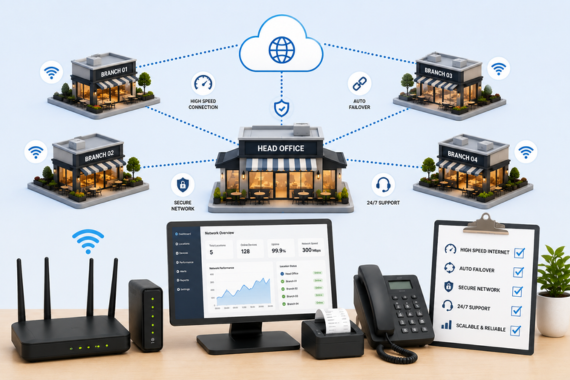
A medical office’s phones, EHR, patient portal and card terminals all run on the same internet connection. If it fails, the front desk cannot book, triage, check in or take payments. Vivant SmartNETWORKS closes that gap.
Vivant designs, deploys and manages every layer behind your phones, including primary internet, backup internet, network security and quarterly PCI/HIPAA compliance scans, so one team is accountable from the network to the call.
If a missed call is a missed patient and you want a HIPAA compliant phone system that stays up, with no caps on texting and no surprise fees, Vivant is a great option not offered by many competitors. Add SmartNETWORKS if you want one provider to run the internet, backup and network security behind it, at every office.
Score: 4.7/5 (Security and BAA 4.5 · Reliability 5 · Cost and features 4.5 · Medical office features 4.5 · Setup and support 5)
2. Nextiva
Nextiva is an easy system for small medical offices that need a solid auto attendant and contact management. It signs a BAA.
At a glance:
- Best for: small offices that need an auto attendant and contact management
- Price: $23 to $50 per user per month
- BAA: yes, standard
Strengths:
- Easy to use: staff learn it quickly.
- Strong reporting: call volume, wait times and missed calls.
- SMS and video in the same app.
- CRM integration.
- 99% uptime guarantee.
Considerations:
- Few healthcare-specific security details in its public material.
- Texting caps: 100 to 500 messages per user on the lower plans.
- Low prices need a 12-month contract; monthly billing costs up to twice as much.
- Support can be slow.
- Outages: if the internet goes down, phone service goes down.
- No call deflection: no automated texting option to send patients self-help links to book appointments online, request refills, get directions or find parking.
Choose it if you want a simple system with good reports. Skip it if you need EHR integration or want to automate your phones with AI call answering.
Score: 4.2/5 (Security and BAA 4 · Reliability 4.5 · Cost and features 3.5 · Medical office features 4 · Setup and support 3.5)
3. RingRx
RingRx is built for healthcare, which makes it a good fit for small practices that want a simple medical practice phone system. It signs a BAA as standard.
At a glance:
- Best for: small practices that want a healthcare-only system
- Price: $15 to $25 per user per month, plus $5 per user for call recording
- BAA: yes, standard on all plans
Strengths:
- Healthcare-first design: built around medical office workflows.
- Secure texting for patient messages.
- Web faxing on the Grow and Clinic plans.
- Low entry price.
Considerations:
- Extra fees: call recording costs $5 per user, and patient texting carries monthly carrier registration (TCR) fees on top of the plan price.
- EHR integration is limited. Ask about your exact EHR.
- Fewer advanced tools for large clinics.
- Outages: if the internet goes down, phone service goes down.
Choose it if you are a small practice and want a system made for healthcare. Skip it if you run a large, multi-site clinic.
Score: 3.9/5 (Security and BAA 4 · Reliability 3.5 · Cost and features 4.5 · Medical office features 3.5 · Setup and support 4)
4. RingCentral
RingCentral is a good choice for large practices with high call volumes and EHR needs. It only signs a BAA on advanced plans and covers voice, fax, video, and messaging in one account.
At a glance:
- Best for: large practices, high call volume
- Price: $30 to $45 per user per month
- BAA: only on advanced plans
Strengths:
- Scales well: handles many sites and heavy call loads.
- All-in-one: secure calling, fax, video and mobile access.
- AI call routing: sends callers to the right queue.
- 99% uptime published.
Considerations:
- Add-ons raise the cost: AI receptionist, call queues and extra texting are sold separately.
- Texting caps: 25 to 200 messages per user per month, depending on the plan.
- Learning curve for staff.
- Some prices need a call with sales.
- Outages: if the internet goes down, phone service goes down.
Choose it if you have a large team, heavy call volume and an EHR to connect. Skip it if you want one clear price with nothing extra.
Score: 3.9/5 (Security and BAA 4.5 · Reliability 4.5 · Cost and features 3 · Medical office features 4.5 · Setup and support 3)
5. Dialpad
Dialpad is the pick for AI-first offices and practices that do a lot of telehealth. It signs a BAA.
At a glance:
- Best for: telehealth and AI-first offices
- Price: $27 to $35 per user per month
- BAA: yes
Strengths:
- AI call summaries: notes after every call.
- Voicemail transcription.
- HD voice and video.
- Device switching: move a call from desk to mobile.
Considerations:
- Texting caps: 250 outbound messages per user.
- Support delays reported by some users.
- Needs strong internet for good call quality.
- Advanced features only on higher tiers.
- Outages: if the internet goes down, phone service goes down.
Choose it if you want AI notes on every call. Skip it if your office internet is weak.
Score: 3.6/5 (Security and BAA 4 · Reliability 3.5 · Cost and features 3.5 · Medical office features 4 · Setup and support 3)
6. 8×8
8×8 suits multi-site practices, hospitals and residential care groups that need team messaging and call insights. It supports HIPAA.
At a glance:
- Best for: multi-site practices, hospitals and residential care
- Price: from $28 per user per month; advanced plans by quote
- BAA: yes
Strengths:
- HIPAA support.
- Team messaging and unified communications in one platform.
- Call insights for managers.
- Multi-site tools.
Considerations:
- Training needed to use all features.
- Prices are hard to compare, and advanced plans cost much more ($57 monthly for X4).
- Outages: if the internet goes down, phone service goes down.
Choose it if you run a large group with a call center. Skip it if you are a single office.
Score: 3.6/5 (Security and BAA 4.5 · Reliability 4 · Cost and features 2.5 · Medical office features 4 · Setup and support 2.5)
7. Vonage
Vonage fits small and medium offices that want video, or that have in-house IT to build custom workflows. It is HIPAA-ready.
At a glance:
- Best for: offices with in-house IT
- Price: from $10.49 per user per month
- BAA: yes
Strengths:
- APIs for custom work.
- Video built in.
- Low entry price.
Considerations:
- Too technical for some small teams.
- HIPAA setup depends on how you configure it.
- Recording and toll-free numbers are add-ons.
- Outages: if the internet goes down, phone service goes down.
Choose it if you have IT staff who want to customize. Skip it if you want a system that works out of the box.
Score: 3.5/5 (Security and BAA 3.5 · Reliability 4 · Cost and features 4 · Medical office features 3 · Setup and support 2.5)
Does a medical office phone system need to be HIPAA compliant?
Yes, if the system touches protected health information (PHI). HIPAA defines PHI as any information that can identify a patient combined with their health status, care or payment data. Voicemails, recordings and texts often contain it.
HIPAA compliance for a phone system needs:
- A BAA signed by the vendor.
- Encryption for call data, voicemail and recordings.
- Access controls that limit which staff can retrieve patient-related content.
- Audit logs that show who accessed what.
- Retention policies that match state and federal rules.
Many popular VoIP platforms do not offer a BAA by default, and some offer it only on enterprise tiers, so confirm it before you sign. Vivant includes a BAA with every deployment. For more detail, read our guide to cloud phone systems for healthcare.
What features do medical offices need in a phone system?
The phone system features for a medical office that matter most are clinical call routing, after-hours coverage, secure recording, patient texting and, more and more, AI call answering. Medical phone systems that skip these features push the work back onto the front desk.
Call routing in clinical settings
An auto attendant should route callers by intent:
- Lab results go to a different queue than scheduling.
- Triage calls go to the triage nurse line or a physician first.
- Billing questions go to the bill pay line.
- Busy lines: hunt groups and ring-all rules decide what happens. A call that is not answered at scheduling within 90 seconds should roll to a backup agent or a queue, not to voicemail.
Caller ID and call history help staff see who is calling and why before they answer.
Call recording
Many practices record calls for quality and documentation.
- Consent: recording laws differ by state. Some states require two-party consent, so callers must hear a notice first.
- Storage: recordings with patient information must stay in a HIPAA compliant environment with access controls.
- Ask the vendor: where recordings are stored, who can access them, and how long they are kept on your plan.
Patient texting
Patients answer texts faster than voicemails. Texting cuts no-shows and phone traffic for reminders, confirmations, refill updates and “we tried to reach you” follow-ups.
- BAA coverage: ensure the BAA covers texting, not only voice calls.
- Keep it simple: send dates, times and callback requests, not clinical details.
- Watch the caps: many vendors cap texts at 25 to 500 per user per month, or add carrier fees. A practice that texts every patient can hit the cap in a week. Vivant does not cap business texting.
After-hours coverage
After-hours handling is where many medical offices fail. The system should send calls to the on-call line, an answering service or nurse triage, based on the call type. This needs programmable schedules, not manual forwarding that staff forget to turn on.
A typical after-hours flow looks like this:
- Urgent clinical calls: go to the on-call provider or nurse triage.
- Appointment requests: go to an AI receptionist or online booking.
- Billing and records: go to voicemail with a callback promise for the next business day.
- Holidays: follow a separate schedule that you set once a year.
AI receptionist and call answering
An AI phone system for healthcare picks up the calls and helps your patients, so your staff can focus on the patients in your office. It answers during the morning rush, at lunch and after hours.
There are two types of AI phone service for medical offices.
- Entry level is an AI that answers every call, answers common questions and is tied into a text messaging system, so it can text patients links to book appointments online, request refills, complete intake forms, get directions or find parking nearby.
- The more advanced versions do all of the above, and can also book, reschedule or cancel the appointment over the phone and write it to your scheduling system, all without your staff.
The result is a better patient experience: callers get an answer on the first ring instead of a voicemail box, and staff return to fewer messages at the end of the day. For clinical questions, the AI should hand off to a nurse or the on-call line, not try to answer.
Vivant offers both: an optional AI Receptionist (from $59 per month) that answers and books, and missed-call texting from your own number for any caller who still slips through.
HIPAA fax
Why do medical offices still use fax? Many referrals, prior authorizations and records requests still arrive by fax, because it is a closed, point-to-point channel that most healthcare partners accept. A cloud fax that sends documents to a secure inbox removes the paper and keeps an audit trail.
EHR integration and Call Pop
EHR integration shows the patient record on screen when a call comes in (often called a screen pop or Call Pop). Staff can greet the patient by name and see the next appointment. Few systems in this list offer it. RingCentral has the widest EHR catalogue. Check your exact EHR with every vendor before you sign.
Telehealth and video
If you offer virtual visits, pick a system with video built in and a BAA that covers it. Dialpad, RingCentral and Vonage all include video.
VoIP vs a traditional PBX for a medical office
An office phone system with many lines is usually called a PBX (private branch exchange), a multi-line system or a key system. Today most practices choose between an on-site PBX and cloud VoIP.
| Traditional PBX | VoIP | |
|---|---|---|
| Connection | Copper phone lines | Internet |
| Internet dependency | None | Needs internet, or failover |
| Cost to maintain and scale | High | Lower, scales in software |
| Moving offices | Difficult | Easy |
| EHR and practice management links | Rare | Common |
| Remote staff | Limited | Supported |
| Call quality | Stable | Equal or better when provisioned correctly |
The trade-off is internet dependency. Without backup internet, an outage takes the phones down. The fix is a backup connection that switches on automatically when the main internet has an outage. Vivant’s mobile app keeps calls working over cellular during an outage, and SmartNETWORKS adds backup internet that switches over automatically.
How many phone lines does a medical practice need?
A medical practice phone system needs about one concurrent line for every 3 to 4 staff members who handle calls. This varies by specialty and patient volume.
- Example: a busy primary care clinic with 10 front desk staff may need 8 to 12 concurrent lines during the morning rush.
- Use your data: call analytics on peak concurrent calls and hold times give the real number. Most offices find they are undersized the first time they check. Vivant’s Command Central shows this data in real time.
- Adjust later: VoIP lets you add lines without new hardware, so start with a fair estimate and change it after you see real usage.
How much does a medical office phone system cost?
Most medical office phone systems cost $15 to $50 per user per month. But the entry price is rarely the price a practice pays. To stay compliant and run a front desk, you need three things on the same plan: a signed BAA, call recording and patient texting. Many vendors split these across tiers and add-ons.
So we compared each provider at its practice-ready plan: the lowest plan that includes the BAA, call recording and texting.
Worked example: a five-user practice, monthly billing
| Provider and plan | Price per user | 5 users per month | Patient texting | What still costs extra |
|---|---|---|---|---|
| Vivant Professional | $39.99 | $200 | Unlimited, no caps | No add-ons for recording or texting |
| RingRx Grow + recording | $19 + $5 | $120 | Included, plus carrier (TCR) fees | Carrier texting fees, desk phones, call queues ($65 each) |
| RingCentral Advanced | $35 | $175 | 100 per user per month | More texts, AI receptionist, call queue booster |
| Nextiva Engage | $50 | $250 | 500 per user per month | More texts, CRM integrations |
| Dialpad Pro | $35 | $175 | 250 outbound per user | More texts, fax |
| 8×8 X2 | $28 | $140 | Check with vendor | Advanced features on X4 ($57 monthly) |
Why the cheapest plan is rarely the cheapest bill
- The BAA is not always on the entry plan: RingCentral signs it only on advanced plans. If the plan you pick does not include a BAA, it is not a HIPAA compliant plan.
- Texting caps run out fast: reminders, confirmations and refill updates add up. A practice that texts every patient can use 100 messages per user in a week. Vivant does not cap patient texting.
- Recording is often extra: call recording is a $5 add-on at RingRx. Vivant includes it on Professional.
- Setup takes staff time: a system that the office manager must configure, update and troubleshoot costs hours every month, and those hours never show on the invoice. Vivant sets up the system, monitors it 24/7 and maintains it for free for life.
- Downtime has a cost: a morning without phones means patients who cannot book, reach triage or request refills. Vivant is the only provider here with a 100% uptime guarantee.
Cost savings are important, but reliability is more important.
Consider what a lost appointment or a missed referral costs, and adjust your budget accordingly by picking a provider that ensures you never lose patients due to outages.
The real cost of a medical office phone setup includes the network under it:
- Hardware: desk phones, bought or rented.
- Internet and backup internet: a VoIP phone is only as reliable as the connection under it. Most practices pay a separate internet bill, and many add a backup line.
- Network security and IT support: intrusion prevention, compliance scans and someone to fix problems.
Phone-only providers leave the network to you. Vivant SmartNETWORKS adds primary internet, backup internet, SD-WAN failover and network security, and SmartPROTECT™ adds PCI/HIPAA compliance scans.
What should you ask a phone system vendor before you sign?
Ask these questions in writing:
- Will you sign a business associate agreement, and on which plan?
- What is your guaranteed uptime SLA? Anything below 99.9% is not enough for a medical practice.
- What happens to calls when our internet goes down?
- Where are recordings and voicemails stored, and for how long?
- Which EHR and practice management systems do you integrate with today?
- Is patient texting capped, and what do extra messages or carrier registration fees cost?
- What do onboarding and support look like, and how fast does a human answer?
- Does the BAA cover fax, texting and video, or only voice calls?
- What does it cost to leave, and how fast will you release our numbers?
Write down each answer. The answers make it easy to compare vendors side by side, and they belong in your HIPAA risk assessment.
How to switch phone systems and keep your number
You can keep your numbers when you change a phone system for a medical office. Porting usually takes one to three weeks.
- Sign the BAA with the new provider before you port any number.
- Start the number port, and keep the old service active until it completes.
- Set up call routing and a HIPAA-safe voicemail greeting.
- Train staff on the new system and your phone policies.
How Vivant supports medical practices
Vivant runs the phone system for medical practices, and can manage the network behind it too. Here is what Vivant covers:
- BAA: included with every deployment, at no extra cost.
- Texting: unlimited business texting for reminders, refills and missed calls, with no caps.
- Uptime: 100% uptime guarantee.
- AI Answering: optional AI Receptionist that handles most common patient questions, from $59 per month.
- Front desk: clinical call routing, after-hours schedules, AI Receptionist (optional) and Command Central reports.
- Setup and support: Vivant ports your numbers, builds your call flows and monitors the system 24/7, with free lifetime maintenance.
- Network: add SmartNETWORKS for primary internet, backup internet, network security and PCI/HIPAA compliance scans.
See our phone systems for healthcare.
FAQ
What makes a phone system HIPAA compliant for a medical office?
A HIPAA compliant phone system has a signed BAA, encryption for call data and recordings, access controls on patient-related voicemail and recordings, and audit logs that show who accessed what. The BAA is the first requirement. Without it, the system is not compliant.
Can a medical office use VoIP instead of a traditional phone line?
Yes. Business-grade VoIP gives equal or better call quality than a traditional PBX when it runs on properly provisioned internet with failover. The key requirement is a reliable primary connection and a backup that switches on automatically.
How much does a phone system for a medical office cost?
Cloud VoIP for medical offices usually costs $15 to $50 per user per month at the plan a practice actually needs, with a BAA, call recording and texting. Entry plans start lower but often leave out the BAA or recording. A traditional PBX has higher upfront and maintenance costs.
What happens to a VoIP phone system during an internet outage?
Without failover, a VoIP system goes offline when the internet drops. With managed connectivity and automatic failover, the system switches to a backup connection within seconds, and calls continue. Vivant’s mobile app keeps phones working over cellular during an outage.
Does a medical office need call recording?
HIPAA does not require call recording, but many practices use it for quality and documentation. Recordings that contain patient information must stay in a HIPAA compliant environment with access controls.
What software do most medical offices use for phones?
Most medical offices use a cloud VoIP system with an auto attendant, often connected to their EHR or practice management software. Common choices include Vivant, RingCentral, Nextiva and healthcare-specific tools such as RingRx. Practices without in-house IT often choose a managed system such as Vivant, so the provider handles setup and support.
Why do medical offices still use fax?
Referrals, prior authorizations and records requests still move by fax because most healthcare partners accept it. A HIPAA compliant cloud fax sends these documents to a secure inbox, removes paper, and keeps an audit trail.
Bottom line
For most practices, Vivant Medical Office Phone System is the best medical office phone system.
Every deployment includes a signed BAA, and the Professional plan adds call recording and unlimited patient texting with no caps and no add-ons.
It is the only provider here with a 100% uptime guarantee, and a Vivant team sets it up and monitors it 24/7.
Practices with several sites get one system, one bill and one support team, and SmartNETWORKS adds the network behind the phones.
Want to see what your practice would save? Explore Vivant’s phone systems for healthcare and request a free cost analysis.
Ready to take the next step? Talk to a Vivant specialist or learn more about our business phone systems.